
How Teambuilding Reduces Bullying by Strengthening Group Culture
There’s no one-size-fits-all solution to bullying. But there is one thing every school can do that makes a massive difference: build stronger connections between learners.
When learners feel included, connected, and seen, bullying doesn’t get much room to grow. That’s why teambuilding isn’t just about fun and games. It’s a powerful tool for shaping a healthier, more positive school culture.
Bullying Doesn’t Start With Bad Kids
Bullying often comes from disconnection. When learners feel insecure, invisible, or powerless, they sometimes act out by trying to control others. It doesn’t mean they’re bad kids. It means they’re missing a sense of belonging.
On the other side, learners who feel alone or excluded are more vulnerable. They don’t always speak up, and they don’t always know who to trust.
That’s why prevention can’t rely only on rules and discipline. Schools need to create a group culture that makes bullying harder to start and easier to stop.
What Teambuilding Actually Does
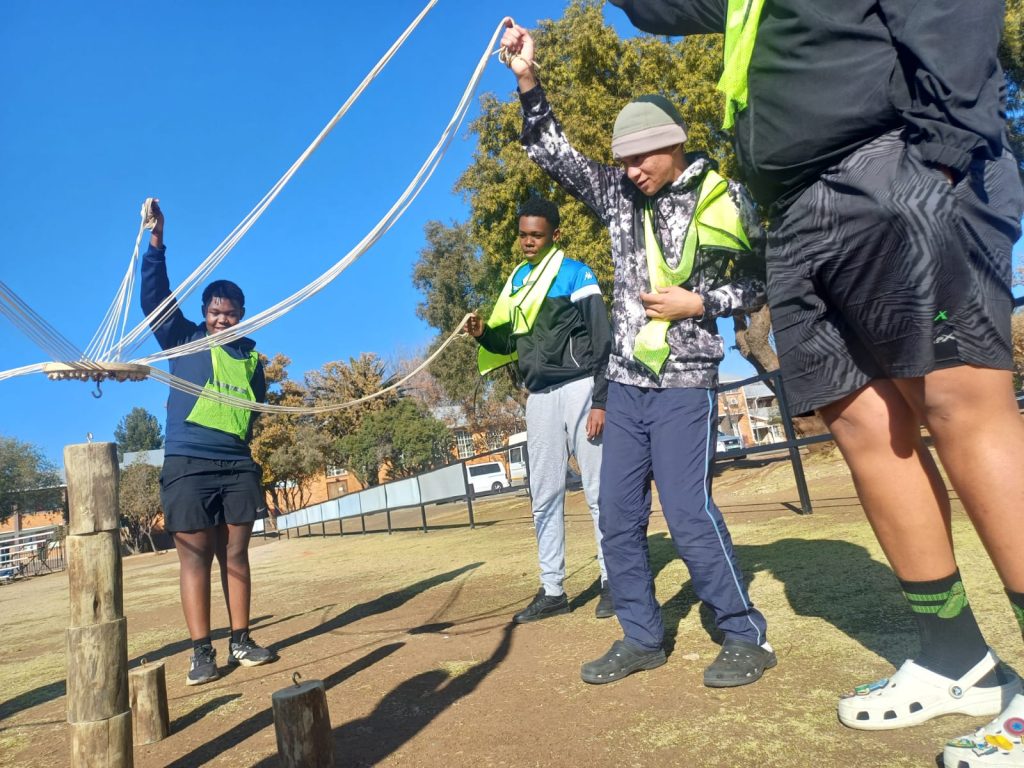
A well-run school teambuilding session changes how learners relate to each other. It builds bridges, not walls. It helps learners connect beyond cliques or labels. And it creates a new tone for how the group interacts.
It Builds Real Connection
When learners work together on a shared task, something shifts. They stop seeing each other in categories and start seeing each other as individuals.
That connection builds empathy. And when empathy shows up, bullying loses power.
It Levels the Playing Field
Bullying thrives on power gaps. Teambuilding closes those gaps. Everyone participates. Everyone contributes. Everyone gets a role.
It doesn’t matter who’s the most popular, the loudest, or the fastest. For once, everyone’s on the same team.
It Creates Positive Peer Influence
In every group, there are natural leaders. Teambuilding brings those leaders forward in a different way. Instead of leading by dominance, they start leading through support, encouragement, and collaboration.
Other learners notice. They follow the energy. And that shifts the peer culture toward kindness.
It Gives Bystanders Confidence
Not every learner is targeted by bullying. But many see it happening. The difference between silence and action often comes down to confidence.
Teambuilding builds that confidence. When learners feel connected to the group, they’re more likely to speak up when something feels off. They trust that they’ll be backed, not blamed.
Why Group Culture Is the Strongest Anti-Bullying Strategy
Rules are important. So are policies. But culture is what learners live every day.
If your school culture is quiet, tense, or full of cliques, bullying finds space to grow. But if your culture is open, energetic, and connected, bullying has less room to hide.
That’s why anti-bullying strategies need to go beyond assemblies and slogans. They need to reach the way learners experience school — and that starts with how they relate to each other.
Teambuilding Is Prevention That Actually Works
When learners feel included early in the year, they start trusting each other more. They learn how to work together, how to listen, and how to support their peers. That learning sticks.
Schools that prioritise relationship-building see real change. Less conflict. More inclusion. And a group culture that actually lives the school’s values.
Why Early Intervention Is Key
You don’t have to wait until Grade 11 to start talking about bullying. In fact, the earlier the better.
Grade 4s, 6s, and 8s are already learning how to treat others. They’re forming habits and beliefs about how to fit in, how to lead, and how to respond to differences.
When schools use teambuilding early, they help learners build the skills and mindsets that prevent bullying before it starts.
School Culture Won’t Fix Itself
If your goal is to reduce bullying, you need more than a list of rules. You need learners who look out for each other. You need connection, belonging, and trust.
School culture is shaped by what learners do together. When they laugh together, solve problems, and support each other, they stop seeing differences as threats.
That’s what teambuilding helps create.
What Makes Teambo Teambuilding Different?
Teambo doesn’t do one-size-fits-all. Our sessions are high-energy, carefully structured, and designed to build connection. Fast.
Every activity is inclusive. No one watches from the side. No one is made to feel uncomfortable. And every learner leaves feeling like they were part of something positive.
We work with schools across South Africa to turn values like respect, inclusion, and participation into real action.
That’s where culture begins. And that’s how schools make bullying less likely to grow.
FAQ: Teambuilding and Bullying Prevention
Does teambuilding actually reduce bullying?
Yes. By building connection and empathy, teambuilding changes how learners relate to each other. This reduces the conditions where bullying usually starts.
What age group does it work best for?
All age groups benefit. The earlier you start, the better. Learners in primary and lower high school respond especially well to teambuilding that focuses on inclusion and group dynamics.
What about learners who don’t like group activities?
We get it. That’s why Teambo designs sessions that include every personality type. Activities are low-risk, non-physical, and structured to make sure every learner feels safe to take part in their own way.
Do we still need other anti-bullying programs?
Yes. Teambuilding is a powerful piece of the puzzle, but not the only one. It works best when paired with clear policies, ongoing discussions, and a consistent focus on positive school culture.
Can one session make a difference?
It can. Many schools report an immediate shift in energy and interaction after a single session. But the real power comes with consistency. Doing this more than once helps those positive changes last.